A few years ago, many sports lighting projects still depended on highly tilted floodlights. Higher tilt. Stronger aiming.
Simply pushing more light onto the field. But today, more professional sports venues are shifting toward
low tilt angle lighting designs. And this is no longer just a design preference. It’s becoming the new standard for modern sports lighting.
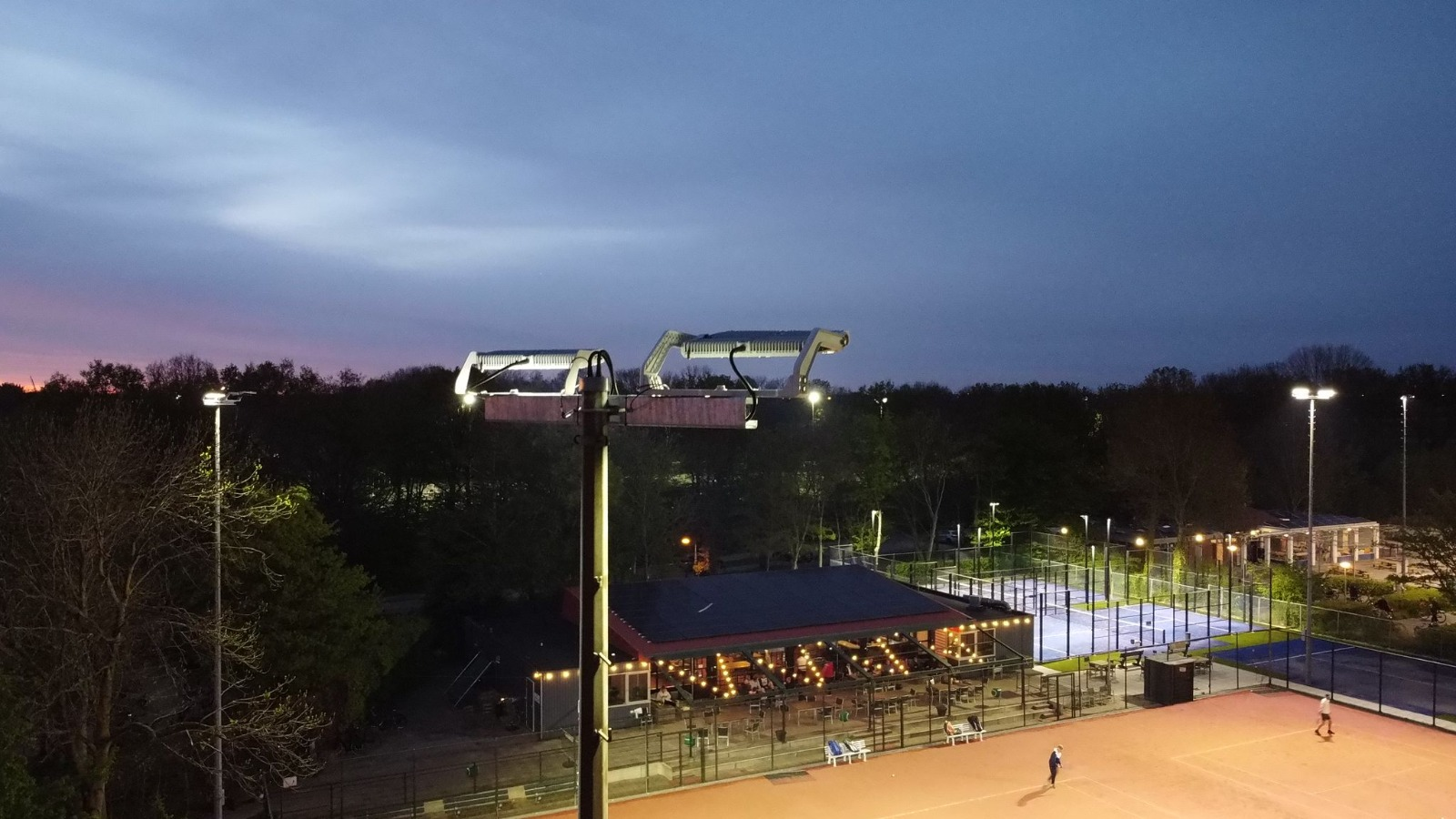
Because modern sports lighting is no longer only about achieving lux levels. It’s about balancing: Performance Glare control Spill light reduction
Structural safety Wind load Long-term maintenance Environmental impact
The more projects we visit across Europe, the more obvious this becomes.
Better spill light control Less upward light and less unnecessary light escaping into nearby houses, roads, or nature areas.
Lower glare for players and spectators Especially important for football, tennis, hockey, and training facilities located near residential zones.
Reduced wind load on poles A flatter luminaire position means lower effective windage — increasingly important for high-mast installations.
Easier structural and maintenance considerations Lower mechanical stress over time.
Cleaner installation logic. Often longer system reliability.
Better alignment with modern environmental requirements Many countries are becoming stricter about obtrusive light and dark-sky related regulations.
-
But here comes the important part: Low tilt design only works when the optics are truly designed for it.
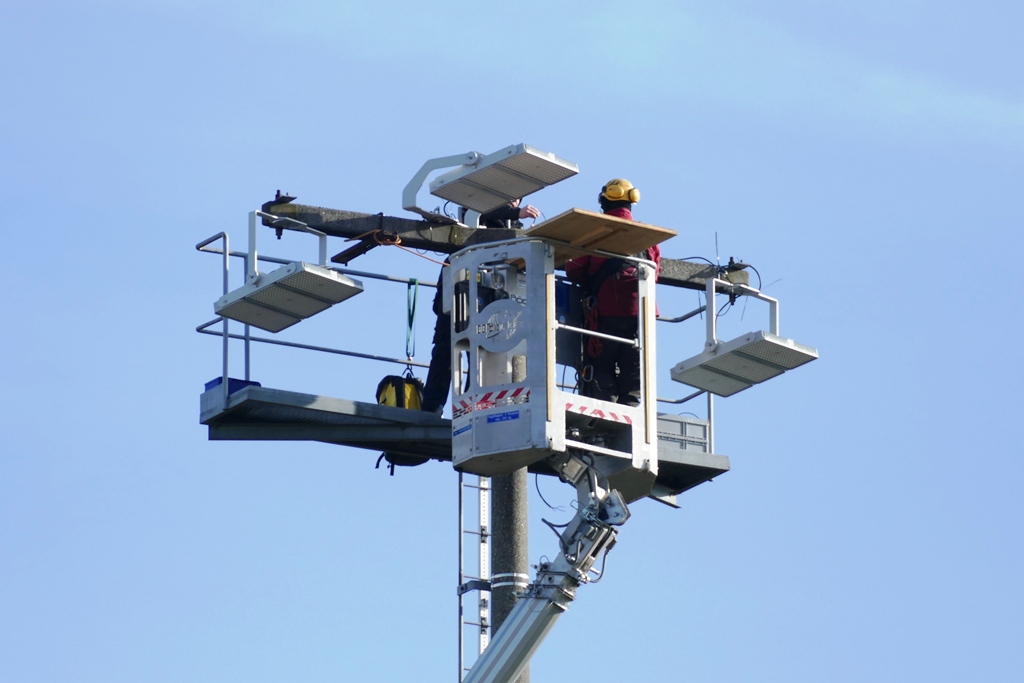
Otherwise, reducing the tilt angle simply creates:
poor uniformity
dark areas
wasted light
uncomfortable glare
This is why optics are becoming the real core of modern sports lighting.
Not just “more power". Not just “higher lux".
But putting the light exactly where it belongs.
At SOGA, this is one of the reasons we have invested heavily in asymmetric optical systems and real on-site testing over the years.
Because good sports lighting should not fight the environment. It should work with it.
